Case Study

Career Design Lab

A semester-long program at Dartmouth's Center for Career Design that brings together six tools into one system. Each term is both a program for students and a research cycle for the lab.
Deliberation System Dartmouth College Center for Career Design 2019 - Present

Career services at most schools run on a familiar model: one-on-one advising, resume workshops, job boards, alumni directories. That covers the transactional side of career development. It doesn't touch the developmental side — the slower work of figuring out who you are, what drives you, and how to make decisions that reflect your values instead of your anxiety.

At Dartmouth, the gap was visible. Students had access to strong advising and alumni networks, but there was no structured program for the harder stuff: identifying patterns across your own experiences, naming what actually matters to you, and learning to think clearly about your future with other people in the room.

The question was whether one program could support all of that — not as a fixed curriculum, but as something that changes every term based on what students actually need.
Career Design Lab Session

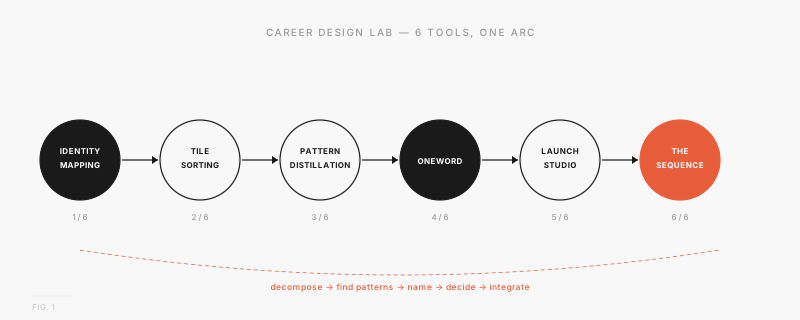
The Career Design Lab is six tools woven into one arc. Each tool was built separately, tested with real students, and revised before being integrated into the sequence. Together they move from pulling apart your experiences, to finding patterns, to naming what matters, to deciding what comes next.

Jump to tool

Identity Mapping Studio Tile Sorting Pattern Distillation OneWord Launch Studio The Sequence
1 / 6

Identity Mapping Studio

What it is
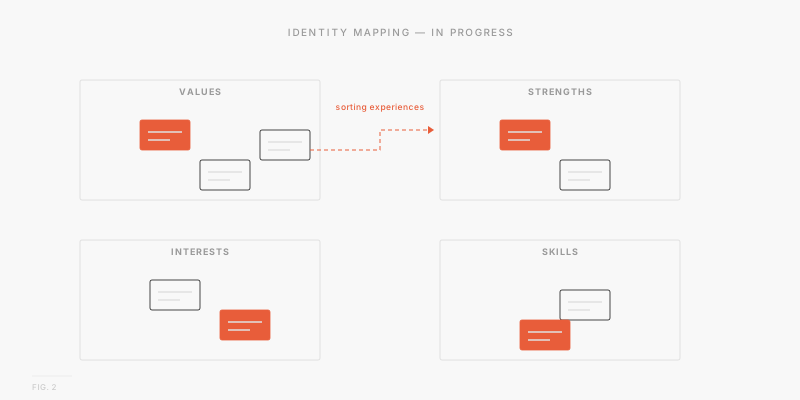
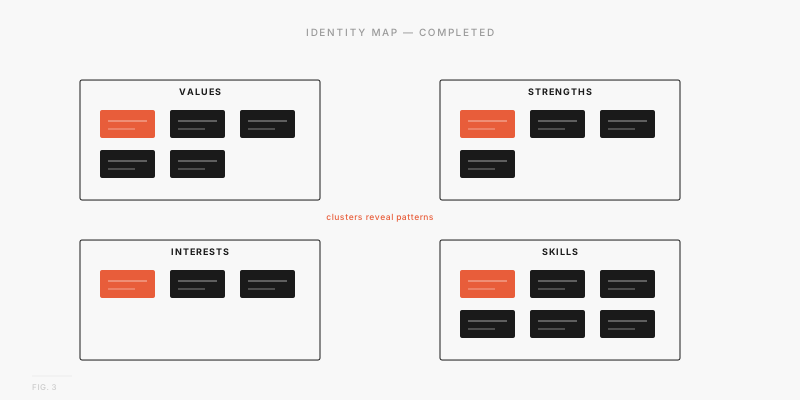
A facilitated workshop where participants take apart their experiences and sort them across four dimensions: values, strengths, interests, and skills. Groups of 15 to 30 work with physical materials — cards, markers, large-format paper — and build their identity maps in the same room, watching each other's narratives take shape in real time.
How it works
Participants start by listing experiences — jobs, classes, projects, volunteer work, anything that mattered. Each experience gets broken into components and placed on the map. The sorting forces choices: does this experience say more about what you value or what you're good at? Clusters emerge. Patterns appear that weren't visible when the experiences lived only in your head.
What we've learned
The physical format matters. Handling cards, moving things around, seeing other people build their maps a few feet away — it changes how people pay attention. You can't zone out the way you can on a screen. The most interesting moments come when someone has to place an experience that fits two categories. That's when people actually stop and think.
Identity Mapping in Progress Completed Identity Map
2 / 6

Tile Sorting

What it is
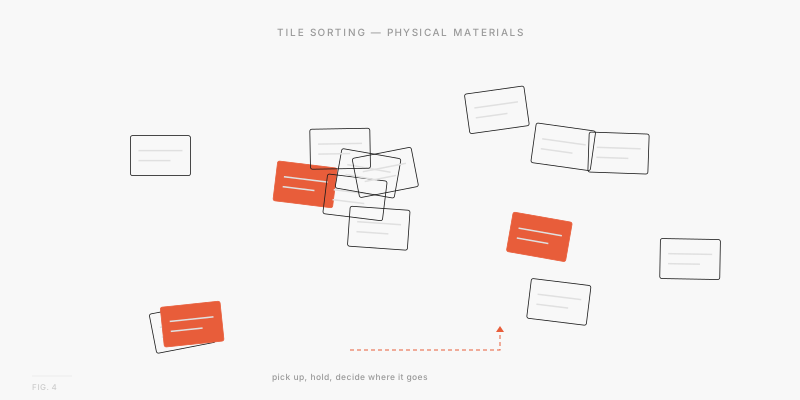
A hands-on exercise that treats experience as physical material. Printed tiles represent moments, skills, and commitments from a person's life. You sort them, group them, and arrange them on a table to find patterns you can't see in a list.
How it works
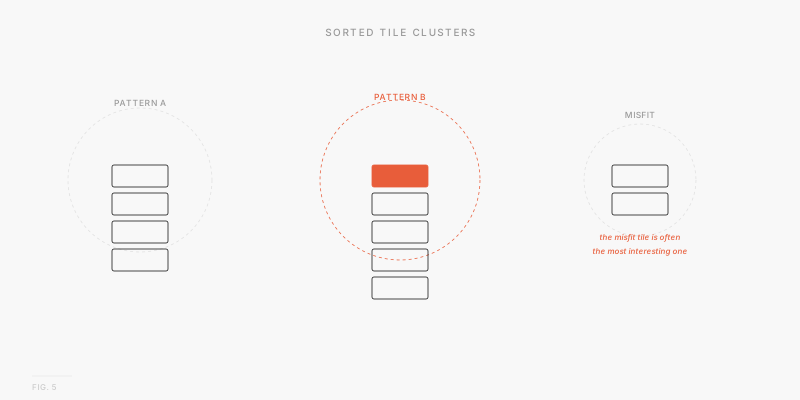
Each participant receives a set of pre-printed tiles plus blank ones they fill in themselves. The tiles go on a table. You move them around — grouping, separating, stacking. There's no correct arrangement. The point is to see what clusters together and what doesn't fit anywhere. That misfit tile often turns out to be the most interesting one.
What we've learned
The physicality changes how people think. Picking up a tile, holding it, deciding where it goes — that's different from dragging something on a screen. People slow down. They reconsider. And by the end, the layout on the table is basically a picture of how that person sees their own life. Moving tiles around starts to feel like rethinking things.
Tile Sorting in Progress Sorted Tile Clusters
3 / 6

Pattern Distillation

What it is
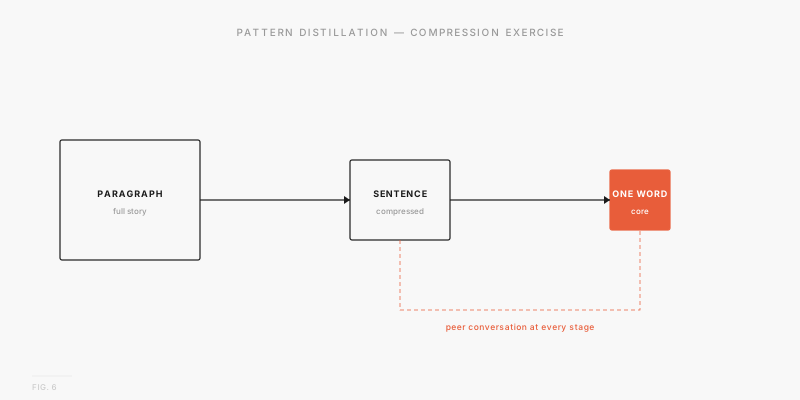
A compression exercise. You take a paragraph about who you are and cut it to a sentence. Then cut the sentence to a single word. Each cut forces a choice — what you keep and what you drop says a lot about what actually matters to you.
How it works
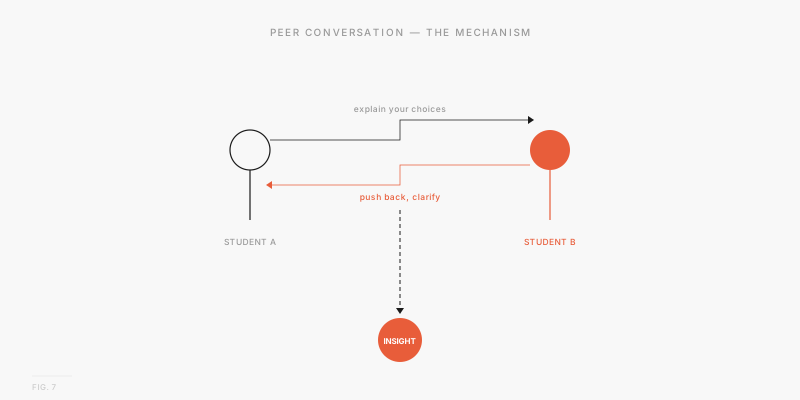
Done in pairs. You start by writing a paragraph about who you are and what drives you. Then you cut it to a sentence. Then a word. At each stage, you explain your choices to your partner. The conversation is the point — the compression is just a way to force it. Common themes across cohorts include mentoring, communication, creativity, and systems thinking.
What we've learned
People who compress alone produce vague, abstract results. People who compress while talking to someone produce results that are specific and personal. The peer conversation isn't a nice-to-have — it's the mechanism. Every tool in the lab now includes a peer conversation component because of what we learned here.
Pattern Distillation Exercise Peer Conversation During Compression
4 / 6

OneWord

What it is
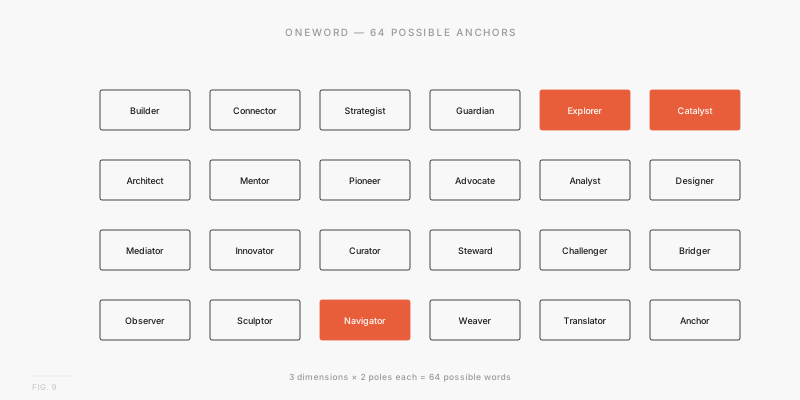
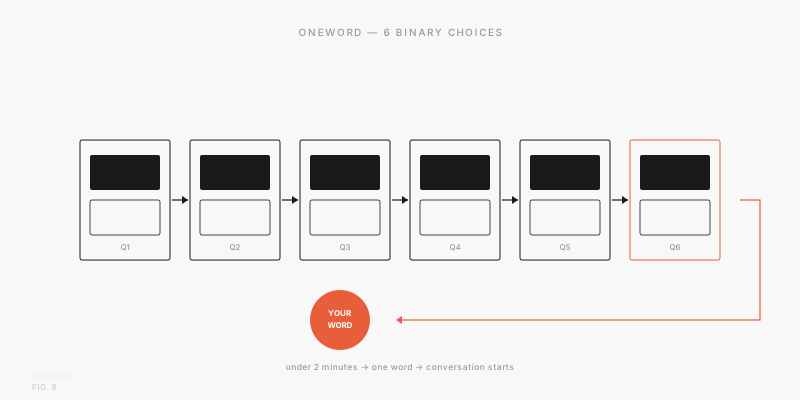
A digital tool that gives you one word to describe yourself — based on six either/or questions about your values, strengths, and skills. The word isn't a label. It's a conversation starter. Something to argue with, push back on, and explain to someone else.
How it works
Six screens, six choices. Each one is a binary — you pick the option that feels more like you. At the end, you get one word. It takes under two minutes. The speed is deliberate: you're forced to go with your gut rather than overthinking. What happens next — the conversation about why that word is right, wrong, or almost right — is where the real work begins. Try it.
What we've learned
The first prototype used 12 dimensions and produced a phrase. It was too specific to be useful and too long to remember. Cutting to six decisions and a single word changed everything. People argue with their result. They say "that's almost right, but..." and then explain who they actually are. That friction is the point. A result that's close but not exact creates better reflection than one that nails it.
OneWord Interface OneWord Results Discussion
5 / 6

Launch Studio

What it is
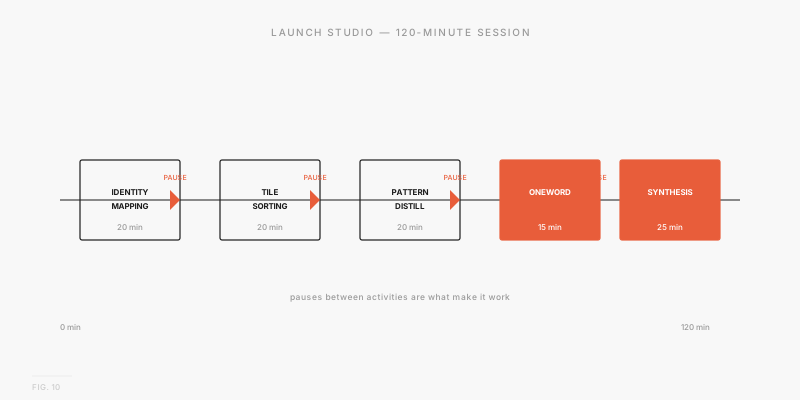
A 120-minute experience that connects the individual tools into a single arc. Instead of doing activities in isolation, students move through a guided sequence where each exercise builds on the one before it.
How it works
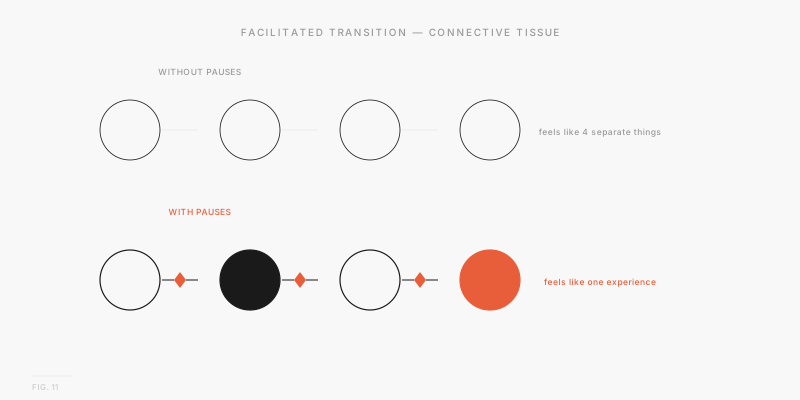
Students walk in and move through the lab's tools in order. Between activities, a facilitator pauses the room and asks people to say what they just learned and how it connects to what came before. Those pauses are what make it work — they turn a series of exercises into something that actually builds. We tested 90-minute and 180-minute versions. Shorter felt rushed. Longer lost energy.
What we've learned
The first version was basically a playlist — exercises run back to back with no connective tissue. It didn't work. Students got tired and couldn't see how the pieces related. What fixed it was adding pauses between activities: short moments where people stop, say what they learned, and carry it into the next thing. Students who go through the whole session say it feels like one experience, not six separate ones. That doesn't happen when you do the tools on their own.
Launch Studio in Session Facilitated Transition Moment
6 / 6

The Sequence

What it is
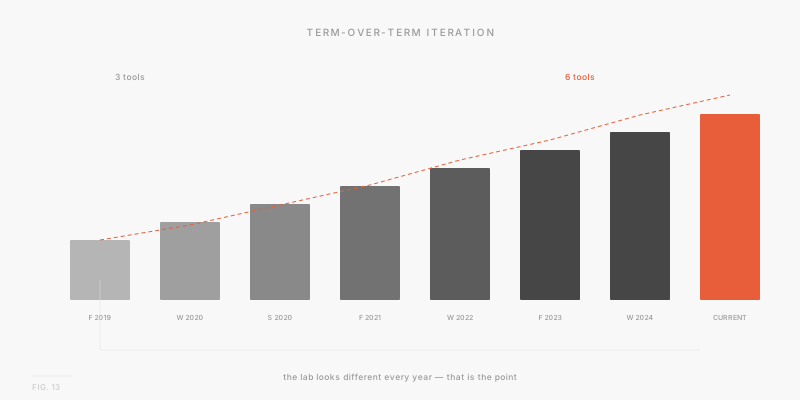
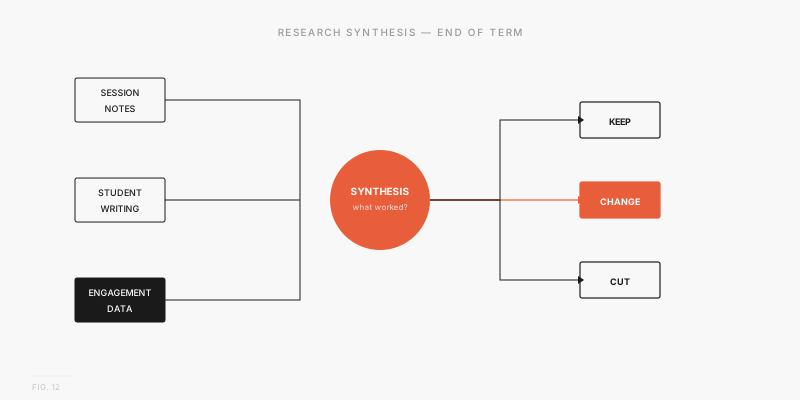
The research and iteration cycle that holds the whole lab together. Every academic term is a design cycle: deploy the current version, observe how students use it, collect data, figure out what's working and what isn't, and rebuild for next term.
How it works
The team watches sessions, talks to students, and collects data from the exercises and conversations. At the end of each term, we sit down with all of it and figure out what to change. This has led to big changes — the order of activities, how much peer conversation to include, how structured vs. open-ended things should be, and whether certain tools belong in the program at all.
What we've learned
Order matters more than anyone expected. Tools that work well on their own sometimes fail in the wrong position within a sequence. The program now looks very different from its first version — and it will look different again next year. That's the point. The lab is a living prototype, not a finished product.
Research Synthesis Session Term-over-Term Iteration Map
Related Work
The 3D platform where students explore careers and keep a journal. Works alongside the lab's in-person workshops.
The career exploration tool used inside the lab — 460 occupations arranged as a spatial map instead of a ranked list.
The same ideas applied to architecture and design — a career toolkit built for that field's specific pressures.
Interested in building something like this for your institution?
Get in touch    Back to all work