§ 01 / Working reports
Five working reports and a workshop,
all in active iteration.
Each report is a project that's been deployed with real students, observed over multiple academic terms, and revised based on what we found. Every report carries front-matter (team, dates, cohort size, status), method, findings, iteration log, references, and cross-links to the research questions it addresses.
Filter by type
Report 01 / Sensemaking environment Active · v6
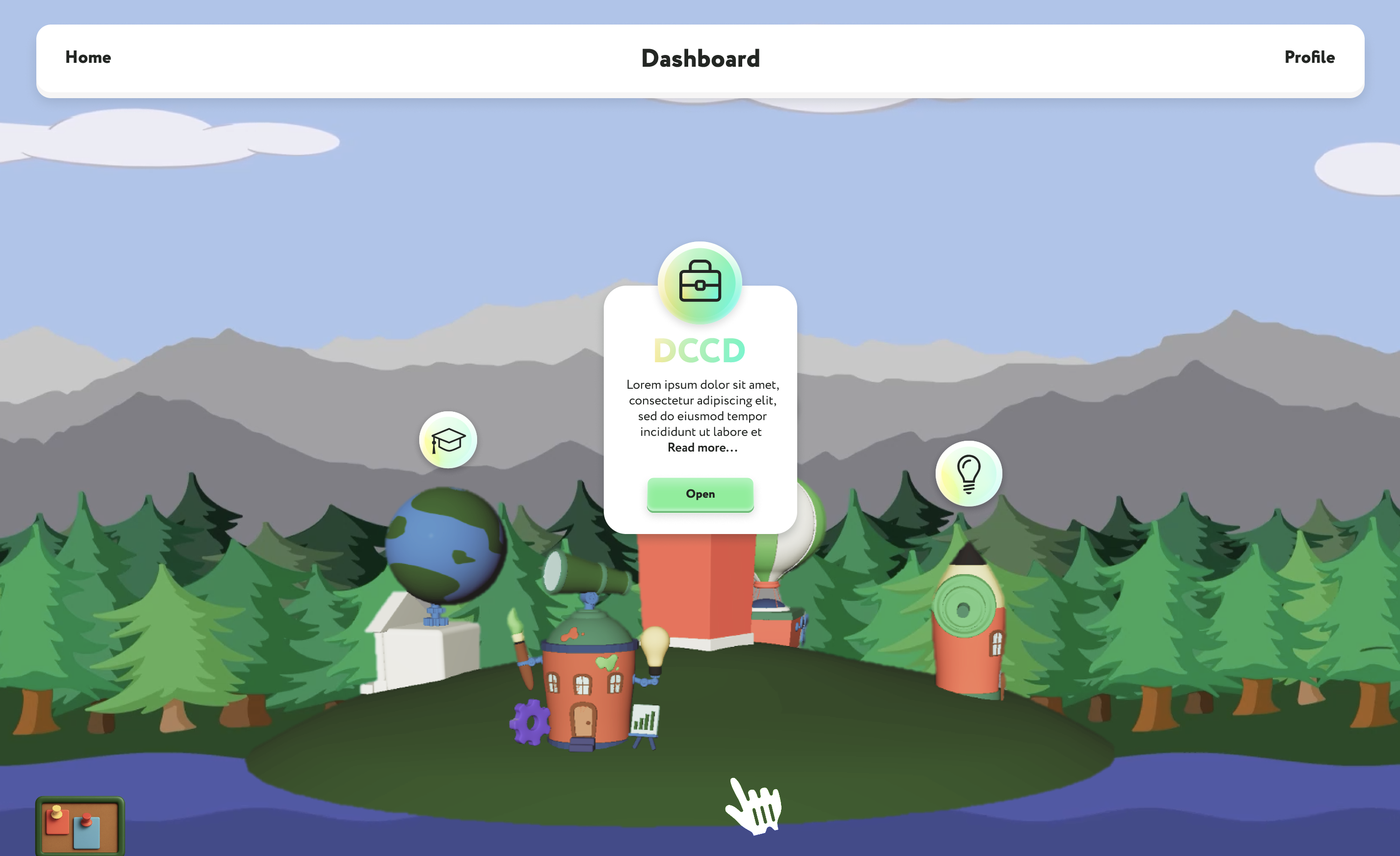
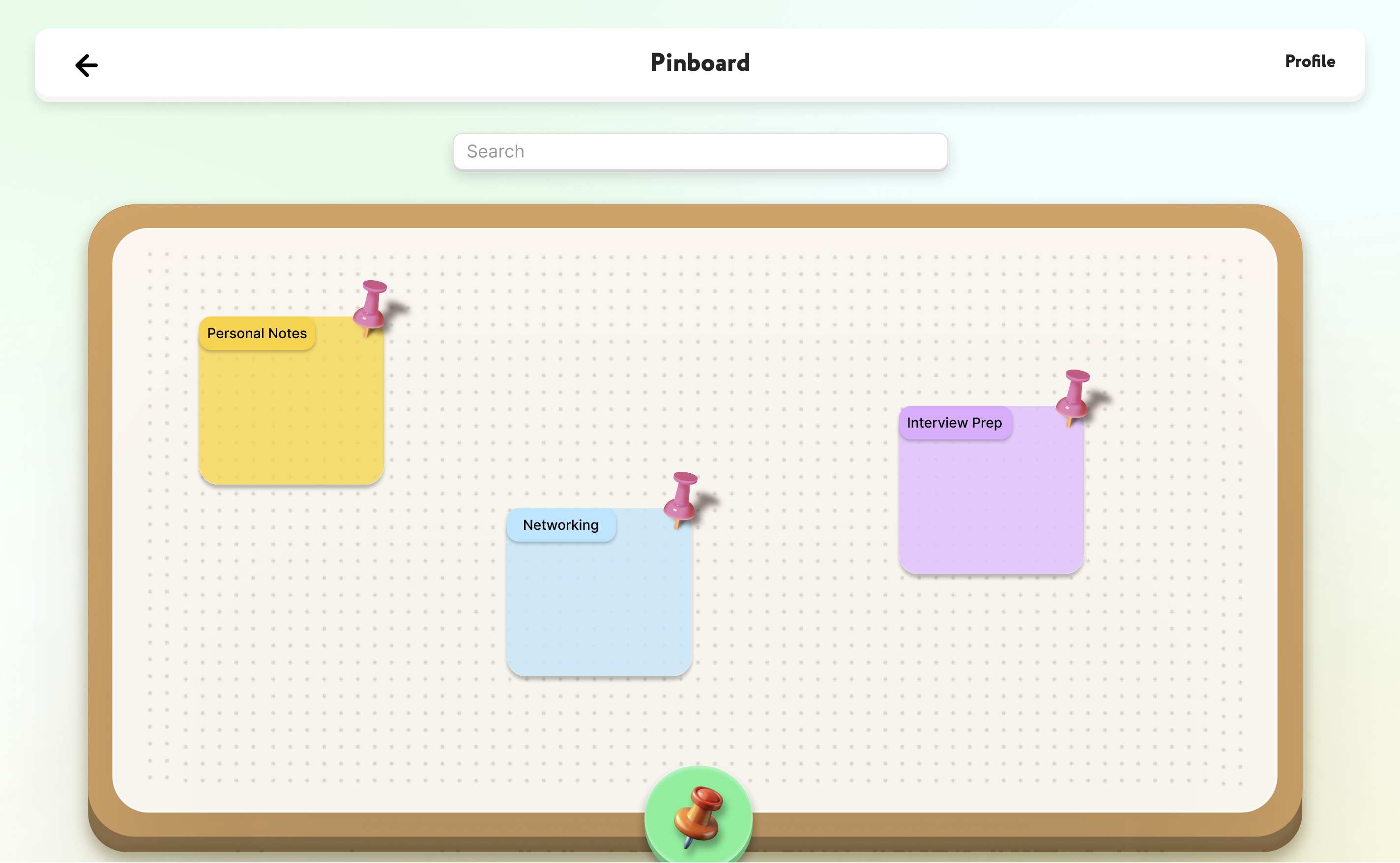
DartWorld
Spatial narrative platform · Dartmouth College / DALI Lab · 2024–present
Context
A three-part platform built with DALI Lab: a reflective onboarding, a navigable 3D environment, and a longitudinal journaling pinboard. Rebuilt each term by a new DALI student team, every academic cycle is a research cycle.
Question
Method
Design-based research over multiple versions. Mixed quantitative engagement traces and qualitative coding of journal entries. Archetype clustering, longitudinal journaling, spatial mapping.
Report 02 / Exploration instrument Active · v3
Synapse
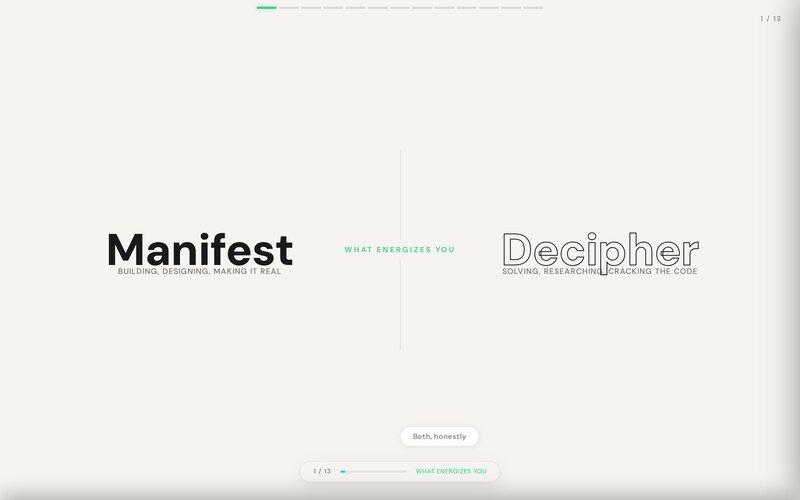
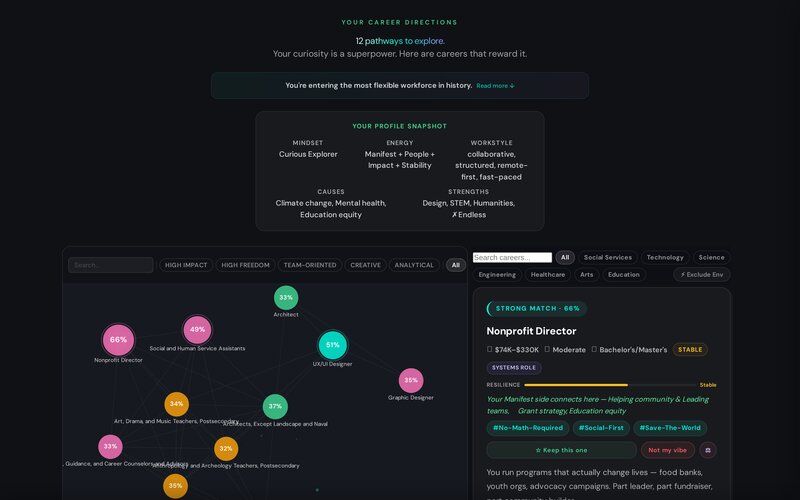
Spatial career exploration · 460 occupations / 13 questions · sethlooper.com/synapse · 2024–present
Context
A career exploration tool that replaces the ranked list with a spatial map. 13 either/or questions produce a profile; 460 occupations (from BLS and O*NET) are arranged on a map where similar careers sit near each other.
Question
What design principles help spatial interfaces support people in exploring rather than selecting? Addresses RQ 2.
Method
Iterative redesign: ranked-list version (v1) replaced by spatial-map version (v2). Whether the map format actually increases exploration over the list format is one of the open empirical questions in the working paper's §5.3. Spatial mapping, binary elicitation.
Report 03 / Deliberation system Active
Career Design Lab
Identity sensemaking program · Dartmouth College · 2024–present
Context
A semester-long program that weaves six tools, Identity Mapping Studio, Tile Sorting, Pattern Distillation, OneWord, Launch Studio, the Sequence, into a single arc. Each term is both a program and a research cycle.
Question
Method
Design-based research across multiple versions. Six tools, each tested independently before integration. Card-sort triangulation, narrative compression, peer conversation.
Six tools
Latest cycle
The current version is iterating the sequence of identity work and pattern work; the next ordering will be documented term-by-term in the program lead's field notes.
Related field note
"Compression needs a witness", why we moved Pattern Distillation from solo work to peer dyads.
Report 04 / Narrative workshop Pilot
Narrative by Design
Career narrative workshop · Dartmouth College · 2024–present
Context
A 90-minute facilitated workshop built around narrative compression: paragraph → sentence → single word. Paired with card sorts (Knowdell, CliftonStrengths, Motivated Skills) and an AI-as-mirror layer at ccd-nbd.vercel.app.
Question
Method
Multi-term pilot at Dartmouth. Compression as private vs. dyadic comparison. AI suggestions used as mirror, not prescription. Compression, card-sort triangulation, AI-as-mirror.


Report 05 / Field-specific toolkit Active · v4
Threshold
Architecture career toolkit · Kent State + independent · thresholdarch.com · 2025–present
Context
A career toolkit specifically for architecture, landscape architecture, and urban design. Started as a flat resource directory; evolved into a reflection-and-resource platform that uses the studio critique format students already know.
Question
What generalizes across professions, and what has to be rebuilt for each one? Addresses RQ 5.
Method
Field-specific deployment over four versions. Test case for the lab's broader argument that reflection methods generalize but vocabulary doesn't. Critique-as-reflection.
Workshop / Mentor training pilot Pilot
Inclusive Leadership Lab
Two-hour facilitated workshop · ISEO × Career Design Lab · Dartmouth · May 22, 2026
Context
A two-hour workshop for international undergraduate peer mentors at Dartmouth, preparing them for fall mentor-mentee match introductions. Co-sponsored by ISEO and the Career Design Lab.
Question
Method
A recombination of lab methods for a new population: narrative compression from NBD, the Knowdell card sort from CDL, and the Burnett & Evans Odyssey Plan adapted for mentor purpose. Pre-survey-informed design (n=13). See also the field note: Anchor, then hold space.
Connected layers
The reports above are projects. The research questions they address, the methods they use, and the literatures they draw on are documented separately.
The animating questions and how the projects map onto them.
Working write-ups of the methods that recur across projects.
The framework paper, six prototype-level working reports, and two conceptual papers, with full references.